Payments report Q1 2026: Mobile first, seasonality and digital wallets
The first quarter of 2026 reveals several clear trends in Swedish consumer payment behavior. Mobile payments continue to accelerate and consumers complete purchases faster and with less friction than ever before. At the same time, certain sectors stand out strongly during seasonal peaks. Below are the three major trends emerging from the Q1 data.
1. Mobile takes the lead, even in physical retail
Mobile and digital wallet usage continued its steady climb in Q1. Looking at the progression over the last three years, we see mobile payments are now the clear choice for consumers:
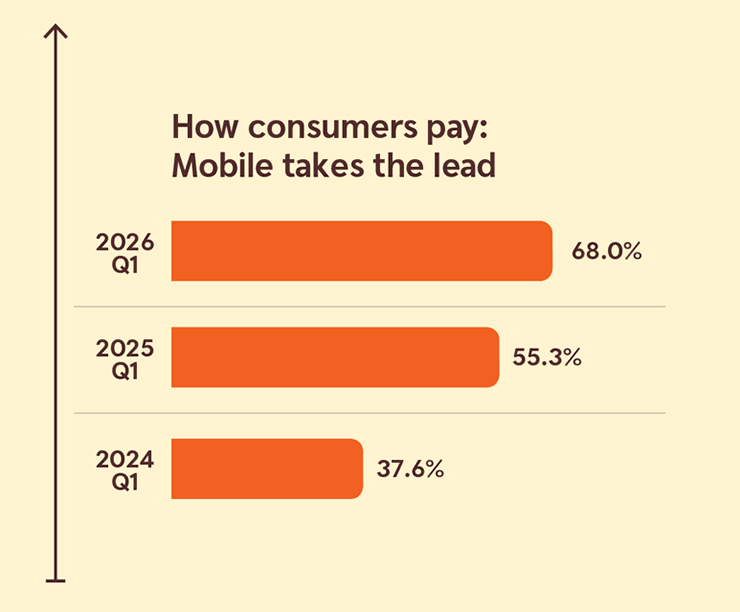
This means more than two out of three purchases are now completed on a mobile device – a shift driven largely by digital wallets such as Apple Pay, used increasingly both online and in‑store.
Key takeaway:
People bring their mobile-first habits with them everywhere. A smooth mobile experience is no longer something extra – it's something you expect.
2. Sports break drives significant spikes across travel and leisure
The winter-sports break (weeks 7–10) remains one of the strongest seasonal peaks in Swedish commerce. When comparing this period with baseline weeks (weeks 3–6), the data shows clear, category‑specific increases.
Top sectors – increase in number of transactions versus baseline:
- Hotel: 16.9%
- Car/boat rental: 14.7%
- Bar/restaurant: 13.0%
- Other retail: 12.4%
Top sectors – increase in transaction volume versus baseline:
- Car/boat rental: 26.4%
- Hotel: 18.4%
- Bus: 15.7%
- Fuel: 15.6%
- Bar/restaurant: 15.5%
Breakdown
The data confirms a strong seasonal uplift across travel and leisure categories. Both the number of transactions and the overall transaction volume increase during the sports-break period.
Car rentals stand out in particular, with the highest uplift in volume (+26.4%). This reflects several behavioral patterns during the winter holiday:
- Families travel more and over longer distances
- Larger vehicle rentals become more common
- Prices tend to rise during peak weeks
- Movement to and from destinations (e.g., ski areas, regional travel) increases demand for fuel and transport services
Volumes for car rentals and hotels rise more than their number of transactions, indicating increased prices during the high-season weeks. Fuel transaction volumes also go up.
In short:
Swedes travel more and spend more during the holiday period – creating a predictable seasonal uplift across travel, leisure and hospitality.
3. Fast and frictionless purchases – digital wallets dramatically reduce cart abandonment
The Q1 analysis also looked at abandoned transactions across payment types. The differences were significant: credit cards had an abort rate of 3%, whereas digital wallets had just 0.15%.
Clear trend:
Digital wallets lead to far fewer abandoned purchases.
Why?
The journey is faster and simpler – no manual card inputs, fewer steps and minimal friction. This has a direct effect on overall conversion, making digital wallets one of the strongest levers for merchants in 2026.
What this means for merchants
- New consumer expectations – smooth, mobile‑first payments are expected everywhere.
- New opportunities – the holiday boom likely means extra hardware and staff are needed.
- Risks of falling behind – fragmented checkout flows or a lack of digital payment support immediately translate to lost revenue.