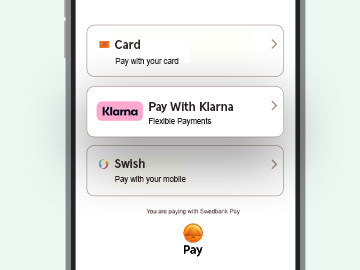
Payments can make or break the customer experience

Customer expectations have changed fast. Today, people want to pay just as smoothly whether they shop in-store, online, in an app or through a QR flow. The way they pay – and how easy it feels – plays a direct role in how they perceive the entire brand experience.
This shift means payments can no longer be treated as something that happens quietly in the background. The right payment setup is now a key part of the customer experience – and a clear competitive advantage.

“Customers rarely remember when payments work perfectly – but they definitely remember when they don’t.”
When a payment fails, the problem isn’t just technical. It interrupts the moment of purchase and can leave customers questioning the entire experience – even if everything else worked perfectly.
“Payments have become one of the most important moments in the customer journey,” says Per Melander, Business Development Manager at Swedbank Pay. “It’s often the last step before a customer leaves. When it works smoothly, it strengthens the overall experience. When it doesn’t, it’s remembered.”
Digital habits are reshaping physical retail
Digital behavior is increasingly influencing how customers want to pay in physical environments. As QR-based ordering, self-service concepts and app-driven shopping journeys become more common, customers expect the same speed and simplicity across them all.
“One of the strongest trends we see is digital payments in physical retail,” says Melander. “Not because it’s ‘new’, but because it removes friction and matches how people already behave.”
At the same time, companies need to balance flexibility with control. Customers may want different payment options in different situations, but businesses can’t afford a setup that becomes harder to manage over time.
“The real challenge isn’t choosing one payment method,” Melander adds. “It’s offering the right mix without increasing complexity behind the scenes.”
Payments now influence conversion and loyalty
For e-commerce, payments have long been closely tied to conversion. But the same thinking now applies across channels: the easier it is to pay, the less likely customers are to drop off – whether they are checking out online or paying in-store.
Customers also expect payments to feel familiar and trustworthy. That’s one reason why mobile-first payment methods continue to grow. In the Nordics, Swish, Vipps and MobilePay have played a major role in making digital payments simple and widely used – both online and in physical environments. At the same time, Apple Pay is growing rapidly.
“More customers are leaving their wallets at home,” says Melander. “They expect to pay with their phone – quickly, securely and in a way that feels consistent, no matter where they shop.”
Why flexibility matters more than ever
The pace of change in retail is not slowing down. New sales channels appear, customer preferences shift, and payment methods evolve. For businesses, the question becomes how to keep up without constantly rebuilding their setup.
“A payment platform needs to support change,” says Melander. “Companies should be able to add payment methods or adjust flows without turning it into a major technical project every time.”
That includes being ready for different customer journeys – from traditional checkout to subscriptions, recurring payments and QR-driven flows.
Turn payments into a competitive advantage
To meet today's expectations, make sure you:
- let customers pay the way they expect – across channels and situations
- make it easy to complete the purchase – so nothing slows customers down
- build a setup that can adapt as your business grows – without making things harder behind the scenes.
Making it work in practice
For many businesses, the competitive advantage isn’t about offering the newest payment method first but about getting the basics right, every day: high availability, consistent experiences and reliable operations.
“When payments work the way they should, customers rarely think about them,” Melander says. “That’s actually the point. The payment experience should feel effortless – and merchants should feel confident that it will keep working as they grow.”
Want to improve your payment experience?
We’ll help you find the right payment solutions for your business and customers. Go to our Contact page and choose your market to get in touch with us.